
Makaleler
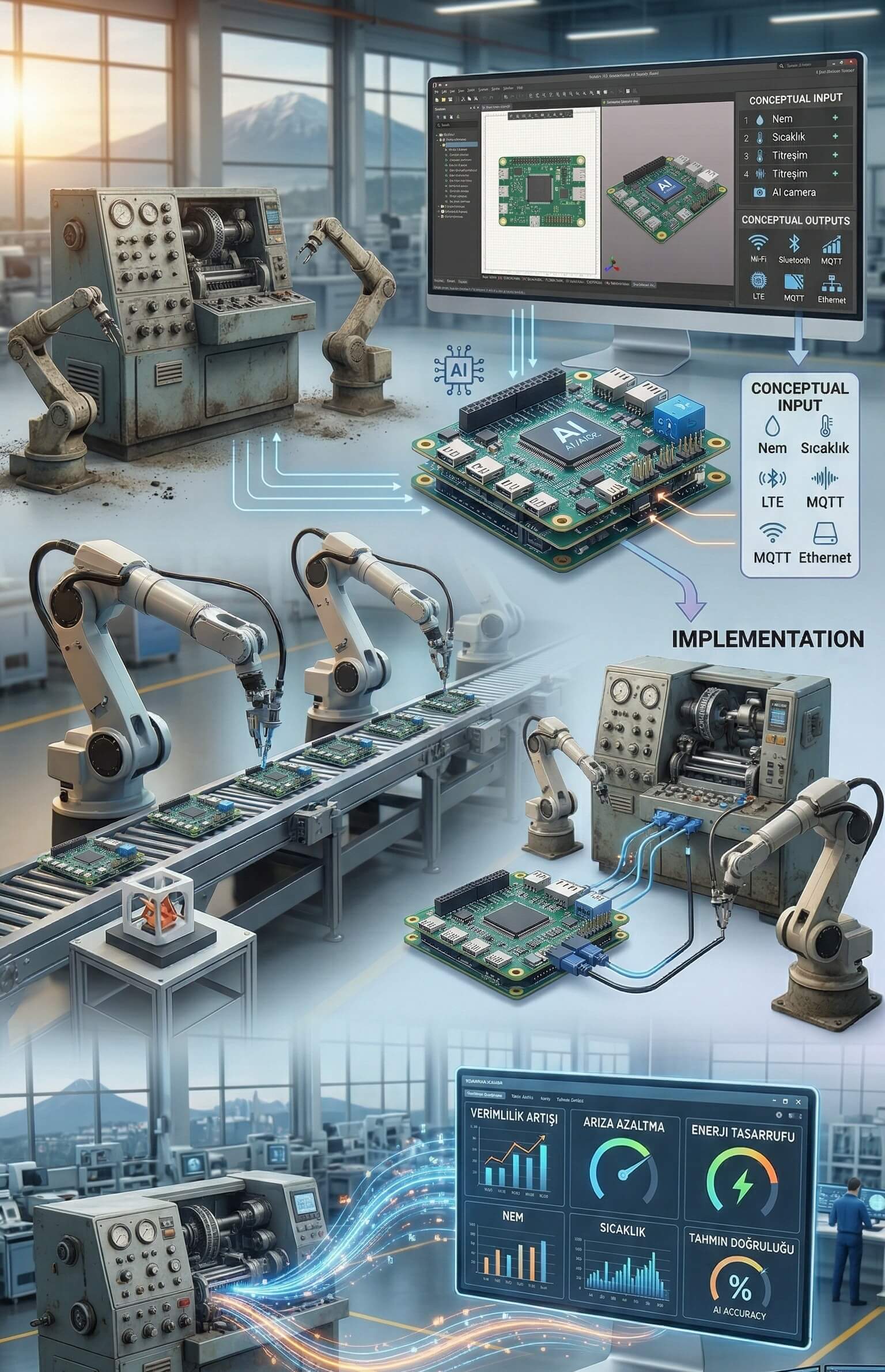
Eski Nesil Endüstriyel Ekipmanlar için Çok Fonksiyonlu IoT Dönüşüm Kartı: Tasarım, Gerçekleme ve Test Sonuçları
Bu çalışma, endüstriyel üretim hatlarında yaygın olarak kullanılan eski nesil ekipmanların Endüstri 4.0 standartlarına uyumlu hale getirilmesi için yenilikçi bir donanım çözümü sunmaktadır. Geliştirilen çok fonksiyonlu IoT dönüşüm kartı, özellikle hassas montaj işlemlerinde kullanılan el aletlerinin dijital dönüşümünü hedeflemektedir. Çalışmanın özgün değeri, Hall Effect sensörleri ve yapay sinir ağları teknolojisinin kombinasyonu ile geleneksel tork sensörlerine alternatif, düşük maliyetli bir çözüm sunmasıdır. Tasarlanan elektronik kart, ARM tabanlı STM32F103C8T6 işlemci ve ESP32 kablosuz haberleşme modülü kullanılarak gerçekleştirilmiş olup, WI-FI protokolü üzerinden veri iletimi sağlamaktadır. Sistemin temel yenilikleri arasında Hall Effect sensörleri ile tork ölçümü, MPU9250 9 eksen IMU sensörü ile açısal pozisyon kontrolü ve yapay sinir ağları ile gelişmiş veri analizi bulunmaktadır. Altium Designer programında tasarlanan çift katmanlı PCB (Printed Circuit Board), prototip üretimi sonrasında Multisim programı ile kapsamlı devre analizlerine tabi tutulmuştur. Test sonuçları, sistemin endüstriyel ortam gereksinimlerini karşıladığını ve özellikle güç katı performansı, gürültü karakterizasyonu ve termal dayanım açısından başarılı olduğunu göstermiştir. Geliştirilen çözüm, bakım personeli tarafından minimum teknik müdahale ile montaj ve devreye alma imkanı sunan modüler bir yapıya sahiptir. Bu çalışma, endüstriyel ekipmanların düşük maliyetli dijital dönüşümü için yeni bir metodoloji önermekte ve Endüstri 4.0 entegrasyonunda pratik bir çözüm sunmaktadır.
Ahmet AK, Turgay Tugay BİLGİN, Allaaddin YİĞİTLER

Analysis of OPC Data Using Federated Learning: An Evaluation of Performance and Privacy
Abstract
This study examines the benefits of applying federated learning (FL) technology to OPC (Operational Performance Control) systems within industrial automation and data analysis processes. FL enables each production facility to process its data locally while only transmitting model parameters to a central server, thereby preserving data privactJ, This approach proDides significant advantages in industrial environments, particularly concerning data prfaacy and communication costs. The study eDaluates FL's potential to ensure data privac,-y, reduce communication costs, improve efficiency in training time, and delfoer high performance in predictiDe maintenance and qualitıJ estimation. Model performance was analyzed using accuracy, Fl score, precision, and loss metrics; the results demonstrated that FL achieved a 90% accuracı; rate, offering competitive performance compared to centralized modeling. In predictive maintenance and quality analysis specifically, FL achieved 85-88% accuracy while reducing network data load by 65%. These findings validate that FL provides a secure, cost-effectfae, and efficient solution for industrial data analysis processes by eliminating the need for centralized data collection. In conclusion, FL and OPC integration supports data privacy, cost savings, and communication efficiency in industrial processes. The study highlights that FL could become a prevalent technology in industrial data analysis, establishing a new standard particularly in digital manufacturing processes.
Süleyman Burak ALTINIŞIK, Turgay Tugay BİLGİN
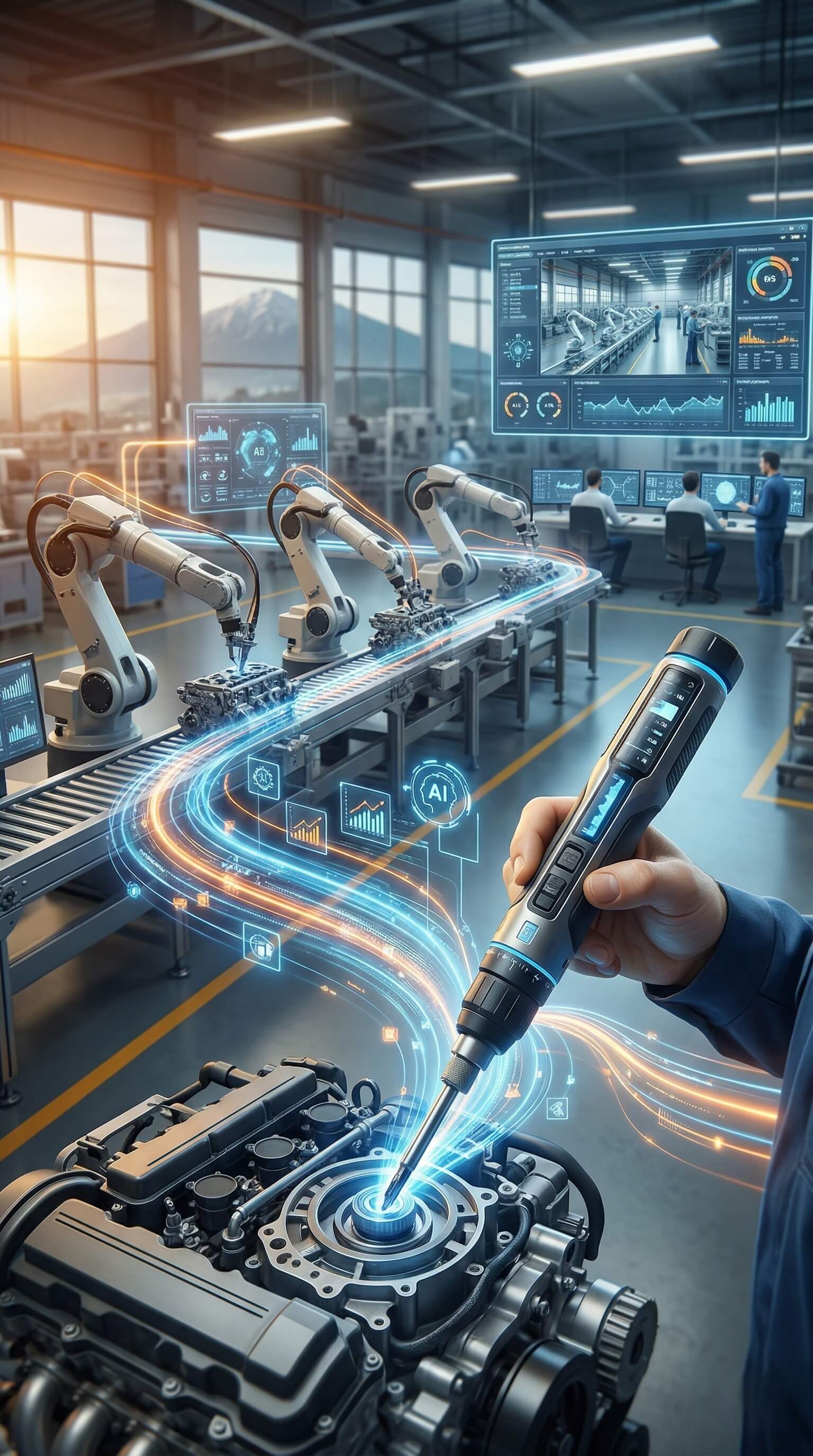
Real-Time Torque Control and Industry 4.0 Integration of Industrial Hand Tools Using Artificial Intelligence
In this study, a novel systenı has been develaped ta adapt legacy equipment widely used in industrial production lines ta Industry 4.0 standards. This research, which aims ta digitalize electro-mechanical hand tools used in critical assembly operations and integrate them with higher-level system software, presents an innovative approach based on the hybrid use of artificial neural networks and enıbedded systems. The develaped system can perform real-time torque level prediction by analyzing integrated data from multiple sensors, including voltage measurenıents, motor current readings, accelerometer data, and gyroscape measurements. The artificial intelligence component of the system consists of the integration of Long ShortTerm Memory (LSTM) models running on the server side and aptimized Multilayer Perceptron (MLP) models running on the embedded system. In tests conducted on a balanced dataset of 6000 samples, the LSTM model achieved an accuracy rate of 94.8%. Additionally, the embedded MLP model denıonstrated a 92.3% binary classification success with a response time lower than lOOms. The systenı integration implenıented using TCP/IP Open Protocol achieved network latency values below S0ms and successfully delivered 99.9% of data packets without loss ar corruption. The systrnı developed as a result of this study has denıonstrated that legacy equipment can be made compatible with Industry 4.0 with minimal hardware modifications, while automating quality control processes and establishing data-driven decision-malcing mechanisms. This approach stands aut as a cost-effective and scalable solution in industrial digital transfornıation projects.
Kader Nikbay Oylum·, Turgay Tugay Bilgin, Ahmet Emir Belkan
Improving Breast Cancer Detection With Upsampling And Resizing Algorithms In Image Processing
Abstract—Our study focuses on the detection of breast cancer using medical image analysis. The researchers explore the effectiveness of various oversampling methods in improving the performance of deep learning models for breast cancer detection. The dataset used in the study has a severe class imbalance with a disproportionate number of cancerous and non-cancerous examples. Six oversampling methods are evaluated in this study. Each oversampling method is applied to the dataset, and the augmented data is used to train deep learning models.
Atakan GÖÇER, Mustafa Özgür CİNGİZ
Üretimde Dijital Dönüşümün Kalbi: MOP (Üretim Operasyonları Platformu) ile Verimliliği Zirveye Taşıyın
Modern Üretimin Zorlukları ve Dijital Çözümler
Günümüzün rekabetçi ve dinamik üretim dünyasında işletmeler; verimliliği artırma, pazar taleplerine çevik bir şekilde yanıt verme ve en önemlisi, veri odaklı kararlar alabilme gibi temel zorluklarla yüzleşmektedir. Bu zorluklar, operasyonel mükemmelliğe ulaşma yolunda geleneksel yöntemlerin yetersiz kaldığı bir noktaya gelinmesine neden olmuştur. İşte bu noktada, Üretim Operasyonları Platformu (MOP), dijital dönüşümün operasyonel kalbi olarak devreye giriyor ve fabrikaları akıllı, entegre ve şeffaf merkezlere dönüştürüyor. Bu yazıda, üretimin tarihsel evriminden yalın felsefenin temel prensiplerine uzanan bir yolculuğa çıkacak ve MOP'un bu sağlam temeller üzerine nasıl dijital bir mükemmellik katmanı inşa ettiğini kapsamlı bir şekilde inceleyeceğiz.
Tolga KULPU
Yalın Üretimde Dijitalleşmenin Rolü: Verimlilik Artışı için Yeni Yaklaşımlar
Yalın üretim, şirketlerin üretim süreçlerini optimize ederek israfları azaltma ve değer yaratma amacını taşıyan bir yaklaşımdır. Bu metodoloji, kaynakların daha etkin kullanılmasını, maliyetlerin düşürülmesini ve çalışan verimliliğinin artırılmasını hedefler. Diğer yandan, dijitalleşme ise çağımızın sunduğu teknolojik yeniliklerle üretim süreçlerini daha akıllı, esnek ve veri odaklı hale getirmektedir.
Kardelen Pınar
A Comparative Study of Classification and Clustering Methods for Data Analysis in Digital Transformation and IoT Systems
This studyemploys classification and clustering methodologies on datasets derived from digital transformation and Internet of Things (IoT) initiatives within the cable and automotive sectors. The analytical procedures are conducted utilizing the KNIME platform, employing Support Vector Machines (SVM) and K-Means algorithms. The results indicate that SVM exhibits superior accuracy rates compared to K-Means within both industries. The data collection methodology facilitated by the Mert Software IoT platform is identified as reliable and efficacious. The primary objective of this article is to augment decision-making precision in digital transformation software and contribute to the scholarly discourse within this domain.
Turgay Tugay BİLGİN, SüleymanBurak ALTINIŞIK, Nihat Aydın ADIGÜZEL

Advancing Workplace Safety: A Proactive Approach with Convolutional Neural Network for Hand Pose Estimation in Press Machine Operations
Press machine operations are integral to goods production across industries, yet worker safety faces significant risks. Machine misuse and non-compliance with safety standards contribute substantially to these incidents. This study addresses the mounting concerns regarding workplace incidents through a proactive solution—a Convolutional Neural Network (CNN) model crafted to prevent press machine misuse by monitoring workers' hand placement during operation. The model that we suggest ensures adherence to safety standards. The CNN model does not replace the role of human operators but acts as a supportive layer, providing instant feedback and intervention when deviations from safety standards are detected. In conclusion, this research endeavors to pave the way for a safer and more secure industrial environment by leveraging the capabilities of advanced technology. The proposed CNN model addresses current concerns and sets a precedent for future advancements in ensuring workplace safety across diverse industries.
Şuayip Aykut ATMACA, Hüseyin HAMAD, Burcu Çağlar GENÇOSMAN

Entegre Bir Yazılım Çözümü ile Endüstriyel Ortamlarda Enerji Verimliliğinin Artırılması ve Gerçek Zamanlı İzleme: NIGHTWATCH
Küresel olarak, ısınma, aydınlatma, ulaşım ve çeşitli cihazlar için yakıt temini gibi faktörler nedeniyle enerjiye olan talep artmaya devam etmektedir. Bu bağlamda, enerji verimliliğinin sağlanması, enerji üretimi, iletimi ve tüketimi ile ilgili faaliyetleri kapsayan kapsamlı bir yaklaşım gerektirmiştir. Sunulan çalışma, endüstriyel ortamlarda çalışmakta ve enerji analizörleri ile arayüz oluşturarak enerji tüketimi, anlık akım ve voltaj gibi verileri toplayıp analiz etmektedir. Bu girişim, fabrika tesislerinde enerjiyle ilgili operasyonlara gerçek zamanlı görünürlük sağlamayı amaçlamaktadır. Buna ek olarak, yazılımın yetenekleri geriye dönük veri analizine kadar uzanmakta ve gelecekteki tahminler için bilinçli içgörüler sağlamaktadır. Ayrıca, analizörlerden gelen enerji tüketimi verilerinin Üretim Yürütme Sistemine (MES) entegrasyonu, iş bazında enerji takibini kolaylaştırmaktadır
Kader Nikbay OYLUM , Kenan SELÇUK , Turgay Tugay BİLGİN

A NEW HYBRID SOFTWARE TESTING AUTOMATION FRAMEWORK
Nowadays, with the development of software technologies in all areas of life, software testing, which is an indispensable need of the software life cycle, has become open to development and change. The replacement of manual testing of software products with test automation systems that minimise the human error margin provides the most important example of the transformation of testing processes into a dynamic structure.
Meral BOZDEMİR, Turgay Tugay BİLGİN , Kader NİKBAY OYLUM
Üretimde Kullanılan Akıllı Olmayan El Cihazlarının Endüstri 4.0’a Uyumlu Hale Getirilmesi İçin Yeni Bir Sistem Tasarımı
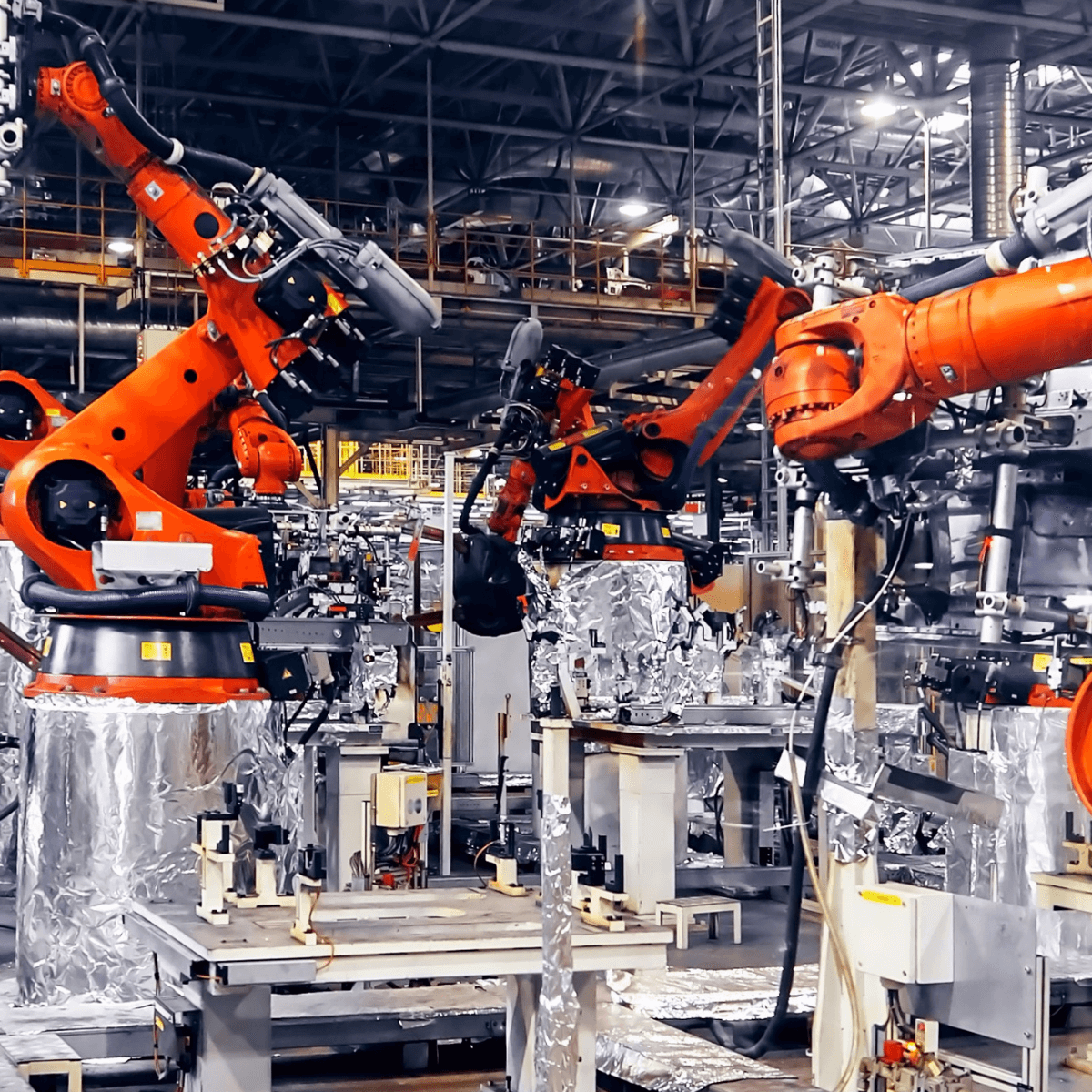
Günümüzde endüstri 4.0 kavramının literatürde yerini almasıyla birlikte fabrikaların dijitalleşmesi süreci hız kazanmıştır. Dijital fabrika yaklaşımındaki sistemi oluşturan, makine ve teçhizatların birbiri ile konuşan akıllı sistem öğeleri haline getirilmesi yaklaşımın temel mantığını oluşturmaktadır. Akıllı teçhizatlar fikrinden yola çıkılarak; gerçekleştirilen bu çalışmada akıllı olmayan elektrikli vidalama cihazları elektronik kart ve yazılımsal bileşenler dâhil edilerek bahsi geçen el aletlerinin akıllandırılması, çeşitli IoT uygulamaları veya bulut uygulamalarıyla iletişim kurabilmesi ve bu sayede yapılan işlerde insan hata payının en aza indirilmesi hedeflenmektedir.
Kader NİKBAY OYLUM , Turgay Tugay BİLGİN, Kenan SELÇUK